

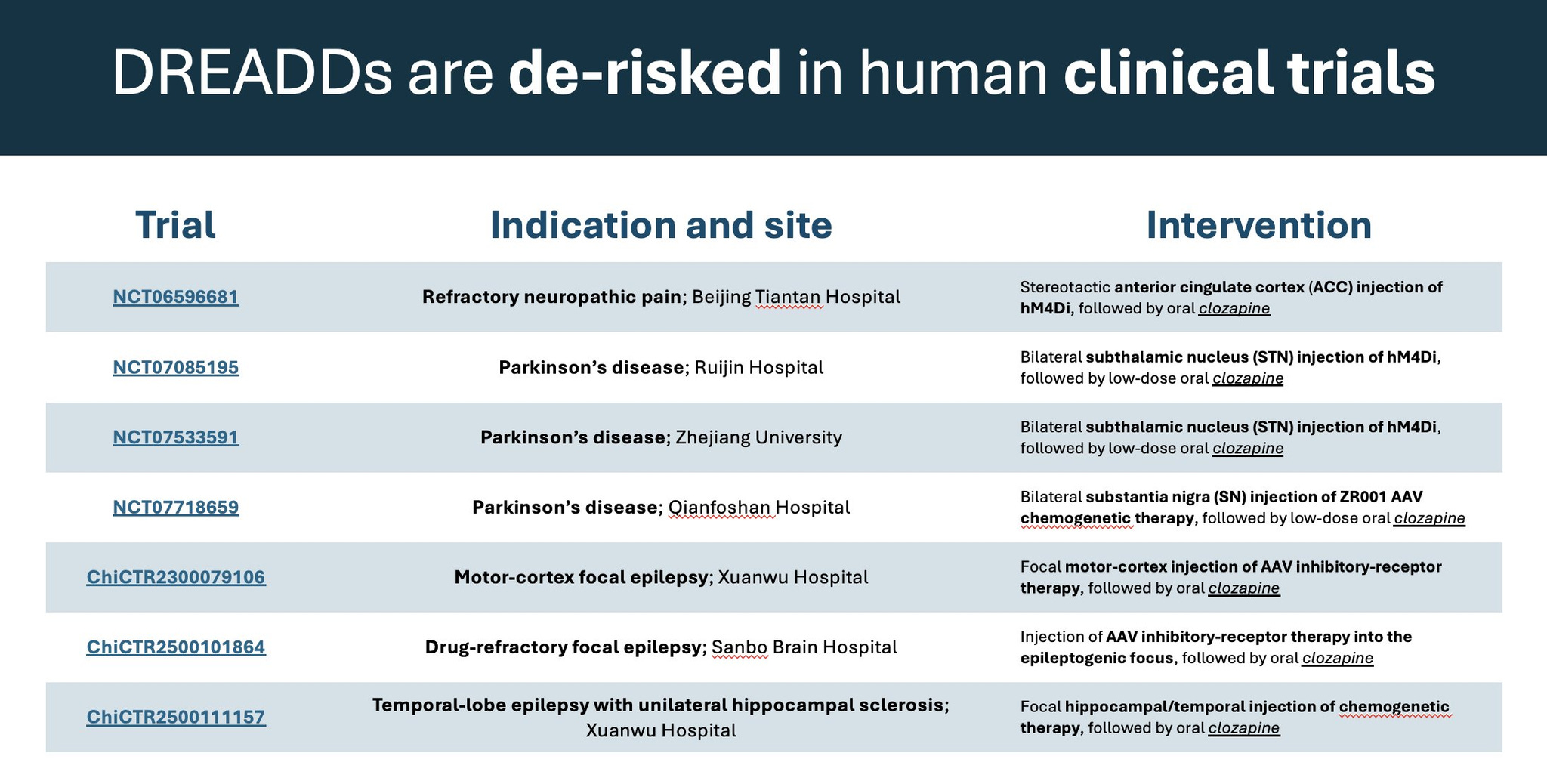
I almost dropped my phone when I saw the news that chemogenetics was in human clinical trials. Chemogenetics is a powerful technique that modifies specific neurons so they can be controlled remotely by normally inert drugs. Bryan Roth, one of the technique’s inventors, told the BRAIN Initiative conference audience on August 13th1 that he had found seven ongoing clinical trials of chemogenetics in China. The disclosure set off a flurry of coverage in the trade media: We’re translating our sci-fi basic neuroscience tools to humans! We’re engineering new knobs for biology! We might have new ways of treating epilepsy, Parkinson’s disease, and pain!
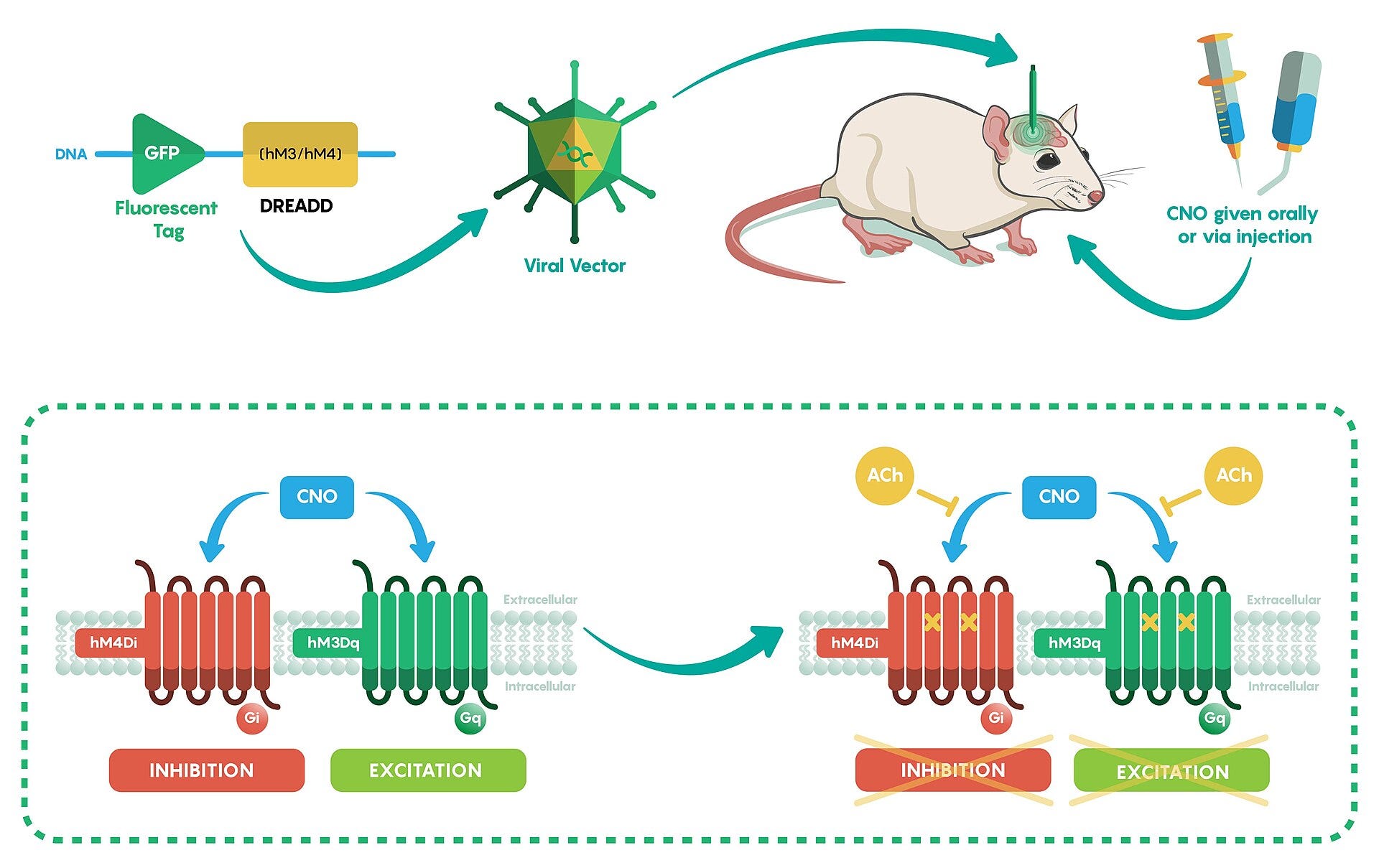

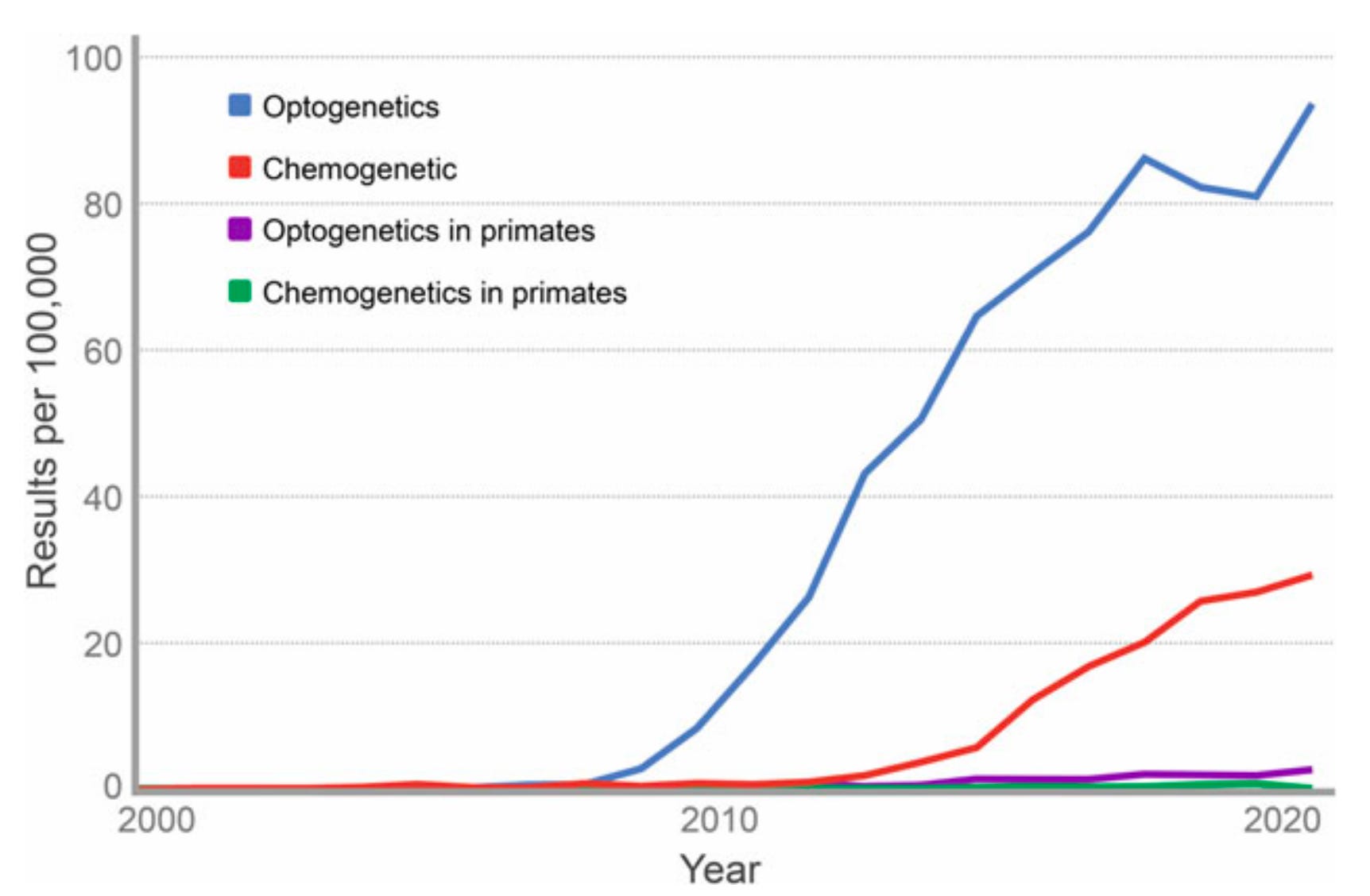
Chemogenetics and DREADDs (designer receptors exclusively activated by designer drugs) are very cool. Many of you will be familiar with optogenetics, which engineers neurons to respond to light by inserting a gene adapted from a light-sensitive microbe. Chemogenetics is similar in spirit but lets neurons respond to designer chemicals. Once a gene for a synthetic receptor is expressed in a neuron, the neuron can be driven—excited or inhibited—by its designer chemical, creating a genetically-targeted therapy that can be controlled and titrated remotely by taking more or less of the designer chemical.
We’ve come a long way towards treating neurological and neurodegenerative disorders since I was in grad school. Back then, we had three tools for affecting the human brain at the source: small molecules (e.g. fluoxetine), electromagnetism (e.g. DBS, tDCS, TMS, ECT), and changing the sensory environment (e.g. psychotherapy). Now we have developed many more: peptides (e.g. GLP-1R agonists like Ozempic), antibodies (e.g. anti-CGRP meds for migraines), focused ultrasound (either high intensity for ablations or low intensity for modulation). Most relevant to this discussion, we have a slew of methods that engineer neurons for therapeutic effect: optogenetics (thus far limited to the retina), chemogenetics, gene-editing therapies, and cell therapies.
These latter are different in kind, because they actually change neurons—or add new ones—often irreversibly, in humans. I had been following the DREADD story peripherally, and I learned a lot by digging into papers that discuss the technology and the descriptions of the clinical trials. In this post, I will unpack DREADDs and chemogenetics, describe what those first clinical trials are doing, and how we might improve upon them. In a follow-up post, I will discuss a competing technology, cell therapy, for the central nervous system.
Why chemogenetics?
Bryan Roth shared this slide at the BRAIN Initiative meeting. Searching through different Chinese clinical trial databases, he found 7 clinical trials for three indications: pain, Parkinson’s disease, and epilepsy. Not all are operating currently; some are pre-recruitment; it adds up to roughly 10 patients. Nevertheless, China is building momentum to advance human chemogenetics.
How can chemogenetics be useful? Consider epilepsy, an indication targeted by three of the ongoing trials. Epileptic seizures happen when a person gets focal runaway excitation. Uncontrolled epilepsy (i.e. refractory) can severely disrupt a person’s life, exposing them to personal injury during seizures, making it impossible to drive or even stay employed. At worst, refractory epilepsy can be fatal, leading to sudden unexpected death.
One way to stop seizures is to decrease overall activity in the epilepsy focus. However, most treatments do this in a much coarser way: they decrease overall activity everywhere in the brain. For example, benzodiazepines (e.g., diazepam, or Valium), which potentiate all GABA receptors in the brain, are used as a first-line treatment to control acute seizures. They cause habituation, dependence, and severe drowsiness. They are untargeted. Wouldn’t it be nice if we had a way to stop runaway excitation by decreasing activity only at the focal point of the epilepsy?
DREADDs allow neurons to be modulated by normally inert chemicals. A virus (an AAV) is engineered to infect neuronal cells and transcribe a payload for a designer receptor. This designer receptor is typically derived by slightly editing an existing human receptor. For example, in the ongoing trials, as far as we can tell, the synthetic receptor is hM4Di, a modified version of the human (h) muscarinic (M) receptor of type 4, which normally binds acetylcholine, a neuromodulator critical in attention. hM4Di no longer strongly binds to its native acetylcholine. Instead, it binds to CNO (normally inert) or clozapine and causes inhibition via a second-messenger, G-protein-mediated cascade.
A patient gets an injection of the AAV at the focal epileptic point, which requires a small brain surgery. The new gene gets expressed broadly in neuronal cells after some time. At that point, the new receptor is sitting there, doing nothing. However, when a patient takes the right oral drug, it binds to the novel receptor (the new knob); there’s more inhibition, and the seizures stop.
Although the results of the ongoing trials are unknown, the logic is sound. Pre-clinical work in non-human primates shows that a similar system (same vector, promoter and drug, but different reporters), was effective at attenuating seizures in motor cortex induced by bicuculline, a GABA antagonist.
Zooming out, any disease that could be remediated if cell type X in area Y could be precisely targeted and excited or inhibited is a potential target for chemogenetics. Chemogenetics is potentially safer and more controllable than gene editing because the effect is reversible by discontinuing the medication2. Chemogenetics could be a big deal.
[B]y placing the circuit modulation under the control of an exogenous ligand, chemogenetics mitigates the potential risk of overdosage intrinsic to viral-vector mediated gene therapy. —Devenish et al. (2026)
Towards Precision Medicine
Chemogenetics can be very precise. However, the exact therapy being tested now is not as precise as is technically feasible, for reasons I’ll detail later. Why not make it more precise? Is it a big deal? Media, discussions on X, and Claude were pointing in opposite directions, so I decided to investigate. I came away with the impression that these first-gen chemogenetics treatments are not very precise, but precise enough for their purpose. Thinking through claims of precision highlights how next-gen chemogenetics could be safer, more precise, and more effective, expanding the range of addressable diseases beyond life-threatening ones. Chemogenetics in non-human primates and humans is still niche. As they say in AI circles, this is the worst that it’s ever going to be, and the future is bright.
The “designer” drug
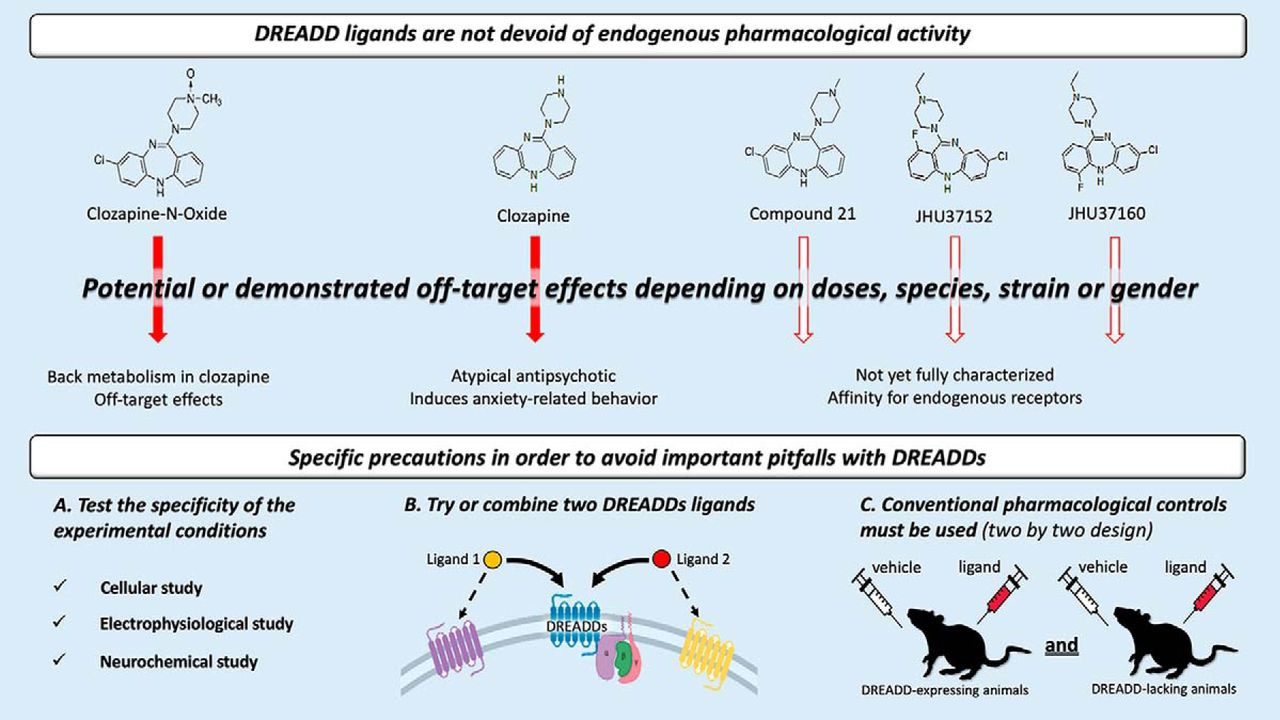
The canonical designer drug in chemogenetics is CNO, which was originally assumed to be natively inert. However, CNO barely crosses the blood-brain barrier in primates, and it gets metabolized to clozapine anyway, so attention has turned to clozapine. Clozapine activates the same receptor, so study designers have relied on clozapine for human studies. However, clozapine is not a designer drug, and it is not inert: it’s an antipsychotic used to treat schizophrenia. It interacts with multiple receptors: 5-HT2A, H1, native muscarinic receptors, alpha-1 adrenergic, and D4.

This promiscuous binding is fine if the drug’s binding affinity is much higher for the target receptors than for off-target ones. Clozapine readily binds to the hM4Di receptor, and the studies therefore use low-dose clozapine. As I was reading this, “low-dose” seemed to entail something similar to low-dose aspirin: a quarter or so of the regular dose. I wasn’t able to find the exact dosing for the epilepsy trials, but the dose in the Parkinson’s disease trials is 1% of the therapeutic dose commonly used for schizophrenia (3.125 mg vs. 300-450 mg). As another point of comparison, clozapine is often used in the treatment of Parkinson’s disease-related psychosis at doses of 25-50 mg; at that dose, side effects tend to be mild, mostly drowsiness.
The doses of clozapine in these DREADD trials are ultra-low doses; Bryan Roth calls them homeopathic doses, in a tongue-in-cheek way. The studies screen for prior exposure and clozapine-related damage: agranulocytosis, the severe depletion of neutrophils, a type of white blood cell, is an idiosyncratic and dangerous reaction to clozapine. Clozapine-induced agranulocytosis is said to be dose-independent, and has been reported at 25 mg per day. It would be surprising if the incidence were as high at 3.125 mg per day as with the full therapeutic dose for schizophrenia. Nevertheless, the risk requires long-term monitoring.
I would therefore characterize clozapine as not ideal, but probably not the bottleneck in this therapy. I was surprised to find that it could, in theory, be swapped for a truly normally inert compound like DCZ without any ill effect. However, DCZ is not approved as a drug anywhere. Using it instead of clozapine would require separate safety trials; for an investigational therapy, stacking multiple sources of risk unnecessarily compounds cost and risk.
An alternative would be to use a “gentler” non-designer drug that has had extensive characterization. DPH, better known by its brand name Benadryl, has been proposed as an alternative, though it requires different modifications to the M4 receptor than the one used in hM4Di. This system, which is called GRANPA3, was published in 2026; hence, it could not have been deployed at the start of these trials.
The designer receptor
hM4Di is 2 amino acids away from the native human M4 muscarinic receptor. This should be viewed as a strength: it minimizes the number of epitopes that could be recognized as foreign by the immune system. By contrast, in optogenetics, the channels are frequently of bacterial origin; they are foreign and can generate immune reactions.
However, hM4Di’s resemblance to the native M4 receptor, to the larger muscarinic receptor family, and to the dopamine GPCRs means it can bind to other common medications. In addition to CNO, clozapine, and DCZ, Weston et al. found that the receptor binds olanzapine, another schizophrenia medication. I’m sure it binds to other drugs as well, hence a patient having received the therapy will need their medications closely monitored.
A drug interaction that would antagonize the receptor would blunt the response and render the new knob ineffective. More dangerous is that incidental agonism could cause over-activation, which could lead to bad consequences. Now, refractory epilepsy patients are frequently on a cocktail of drugs; they are under close medical attention, so the risk is manageable.
hM4Di is the only receptor named in the 7 studies: not every study names the specific receptor, so there’s a chance that another receptor is also used. It is the original, canonical DREADD (Armbruster et al. 2007). In non-human primates, people have used ~5 different metabotropic systems; in mice, this number climbs to several dozen. A much larger designer-receptor space could be explored; many of these are based on human receptor scaffolds, which means many have translational potential.
A broad target
The receptor payload is under genetic control; as far as I can tell, the trials all use hSyn as a promoter. hSyn is a broad pan-neuronal promoter. The thing that really drives selectivity is the injection site; the virus does not transfect cells beyond where it is physically injected.
For the reasons I’ve outlined above, you probably want to minimize the number of cells that express the new knob. Instead of broadly silencing all cells—including excitatory glutamate and inhibitory GABA neurons—you could excite just the right GABAergic cells. That means using a promoter for inhibitory neurons and a Gq-coupled designer receptor that excites them, meaning less overall activity. Inhibitory cells, which come in highly differentiated types, seem quite high-potential as a target.
An invasive procedure
The ultimate bottleneck is that these treatments require brain surgery, because the virus that transfects the cell—an AAV—needs to be locally administered. We know these are robot-assisted surgeries under stereotaxy, and while the details are missing in the trial descriptions, they are likely comparable to other gene therapies (e.g. MeiraGTx’s PD treatment), or equivalently, a DBS surgery in terms of burr hole size and footprint of the tissue displaced. This is acceptable for a debilitating or life-threatening condition, but clearly not ideal. One would want to push in the direction of much smaller burr holes—this patent describes holes in the 200 um to 2 mm diameter range.
Could we do away with the transcranial surgery entirely, using systemic or intranasal delivery, as explored in ARIA’s massively scalable neurotechnologies program? Perhaps, provided we figure out ways to prevent systemic immune reactions from the AAV and spatially target the expression of the virus using a second factor, e.g., using ultrasound. As mentioned in several popular media reports, AAVs can cause life-threatening reactions; there was a recent tragic death of a 6-year-old girl in response to a treatment for Rett syndrome involving AAV injected into the spine. Direct injection into the brain means far lower viral load, and lower probability of a reaction compared to systemic delivery. Can we get low immunogenicity, spatial specificity, and non-invasive delivery?
What it means for neuro
I hope I’ve given you a nuanced view of both the promise of chemogenetics in humans (very high) and the trade-offs of this first-generation treatment. We should think of this first-generation treatment in the same bucket of risk as DBS; it’s brain surgery, it displaces tissue, yet the effect of the treatment can be externally controlled or discontinued without further brain surgery. In the future, it has the potential to be far lower risk than existing treatments for life-threatening neurological disorders.
It was a mystery to me why these trials originated in China rather than in the US or Europe. Milan Cvitkovic has a nice rundown of his visit to China and his impressions of what it does well in neurotechnology. I don’t think this is a story of “China is ahead in neuroscience” (this is a 20-year-old technology), nor a story of “China is approving things that wouldn’t be approved in the US” (as far as I can tell, it could be approved by an ethics committee in the US from a risk-benefit standpoint). In fact, there is an ongoing clinical trial for a chemogenetic therapy in the US.
The reason is probably far more banal: money. Michael Lin, professor at Stanford and leader in engineering optically and chemically controllable proteins, put it thus:

Bryan Roth put it this way:
“…we dreamed about it from the beginning. Never could get funding.”
Note his emphasis: “we dreamed about it from the beginning”. The first tests of chemogenetics were in mice, yet they engineered a human receptor rather than the homologous mouse receptor. Starting from the human receptor means the engineered receptor minimizes the probability of a life-threatening immune response in humans, paving the way to translation. But there are still many knobs to be tinkered with and tweaked that create risk and cost. Scott Sternson notes that “over $100M was invested into chemogenetics in the US based on two companies”. The US clinical trial noted above is a descendant of that initial investment. First-in-human trials are expensive.
There’s reason to be optimistic, however. In Bryan Roth’s words, “given that the basic platform is now being de-risked, anyone with a smidgen of imagination could go forward.”
Zooming out a little bit, I think chemogenetics holds great promise. The roadmap to second-generation human chemogenetics is clear: a broad set of selective GPCRs (excitatory, inhibitory, modulatory) and drugs to drive them exclusively; clinically validated AAVs or other vectors that don’t require brain surgery; promoters that are narrowly targeted towards the right cell types; and combinatorial methods that more narrowly target the effect.
These desiderata are perhaps less important for truly life-threatening diseases like refractory epilepsy or Parkinson’s disease. But there are a number of non-life-threatening afflictions that nevertheless destroy quality of life, from migraines to essential tremor. To address these, the treatment should be minimally invasive and broadly safe. With targeted investment and a coordinated research programme, we could make significant progress on this within the next decade.
Thanks to Bryan Roth for generously providing feedback on this essay.
I was at the conference but in the concurrent NeuroAI session, so I heard about it later.
While the effect is reversible by discontinuing medication, the expression of the new receptor continues. A dangling receptor could be driven by a different drug than the intended one, causing unexpected effects, an issue that requires heightened scrutiny when prescribing subsequent medications to the same patient.
G protein-coupled Receptors Activated by Non-Prescription Agents; good acronyms beget good acronyms
This is the clearest thing I've read on chemogenetics, and auditing precision separately at the drug, the receptor and the promoter is what makes it useful rather than just enthusiastic.
Reading those three together, they seem to say something about reversibility specifically. That is the property doing the most work in the case for chemogenetics over gene editing, and it holds for the effect: stop the clozapine and the knob goes quiet. But the substrate is not reversible in the same sense. A receptor two amino acids from native human M4, expressed under a pan-neuronal promoter, is permanently installed across an unknown population of cells with a cross-reactivity surface you have partially characterised. Olanzapine is the one that's been found. So a patient carries that for decades of subsequent prescribing. Which makes the advantage over gene editing real but narrower than the framing suggests: you can stop driving it, which is not the same as being able to undo it.
Seems like chemogenetics or similar promoter specific gene therapies will be the way forward to tackle circuit based diseases. Current brain drugs ( antipsychotics, antidepressants ) just don’t have the specificity.
I wonder what the appetite for chemogenetics will be given most brain gene therapies are for fatal conditions. Furthermore, to my knowledge most of the rodent studies are fairly acute, what happens when you have hM3Dq expressing for 60+ years? :0 what happens when you accidentally ingest too much clozapine.
Not chemogenetics but interesting paper showing aav with cfos promoter preventing seizures in mice
https://www.science.org/doi/10.1126/science.abq6656