

All happy families are alike; each unhappy family is unhappy in its own way.—Tolstoy in Anna Karenina
The Platonic Representation Hypothesis (PRH), put forward by Huh, Cheung, Wang & Isola (2024), states that networks trained on large, diverse datasets tend to converge on the same representations. By contrast, networks trained on smaller, less representative datasets all have their idiosyncratic flaws and blind spots, similar to the unhappy families of Anna Karenina. The PRH is intuitively appealing: a sufficiently dense sampling of reality is only compatible with one geometry.
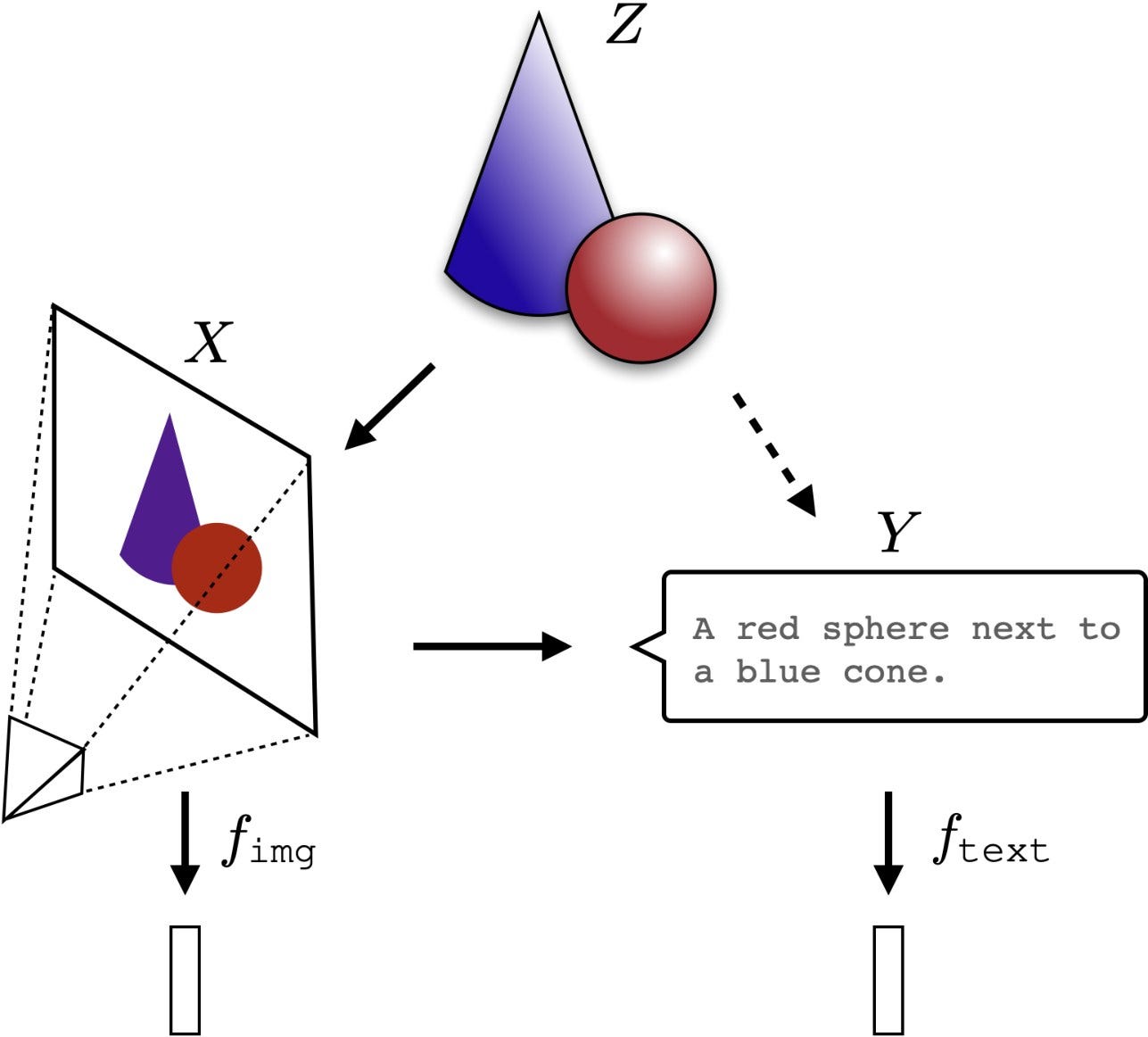
The idea has been highly influential. For example, it was recently shown that it’s possible to align unimodal text and vision representations in deep ANNs without even a single paired sample. It’s also somewhat controversial, with lots of follow-up work arguing that the principle does not always hold.
The PRH paper speculates that the brain’s visual representations are one manifestation of platonic representations. It cites the work of Yamins et al. (2014), Khaligh-Razavi & Kriegeskorte (2014), and the neuroconnectionist branch of neuroAI, which has found that deep neural networks can explain the variance of neurons deep in the visual cortex. Furthermore, neural geometry converges, and the progression of representations as a function of position in the hierarchy is similar in the brain and in ANNs.
Now, if the Platonic Representation Hypothesis held exactly in the brain, it would mean a drastic change in how we approach systems neuroscience. This is best explained in a recent X thread by my collaborator Shahab Bakhtiari:
A lot of systems neuroscientists driven by algorithmic-level questions are going through what looks and feels like a research depression. It’s largely driven by AI advances stripping away the mystery around how brains solve complex cognitive tasks. The big takeaway from AI over the last 10 years: give a distributed system enough search time, a good search space, and an optimal tool, and it will solve harder and harder problems.
If the PRH were literally true, the best course of action, according to this logic, is to just wait for AI models to get better: they will converge on the brain. For many, this feels disempowering, unaesthetic. If the PRH is false, however, then we still have our work cut out for us.
I argue, in a Journal of Neuroscience debate that came out this week [Transmitter coverage, SFN talk this Sunday], that “the Platonic Representation Hypothesis entails that the default is convergence; divergence between capable neural networks and brains becomes a central object of study”. I cite some evidence for divergence between brains and ANNs in that article, but page limits prevented me from elaborating.
Well, there are no page limits on Substack, so in this post, I want to list all of the evidence that the brain and ANNs diverge in representation1. These divergences from PRH can tell us something interesting about the quirks of the brain: its architectural priors, constraints, etc. It may also hold the key to its high performance and robustness.
4 gaps in the PRH
The predictive gap
The most obvious gap is that ANNs only account for about half of the variance in neurons in high-level visual cortex (IT). Vision brain-scores have been at similar levels for the last 10 years. Furthermore, there is no indication that this will be solved, PRH style, by training on larger and more diverse datasets.
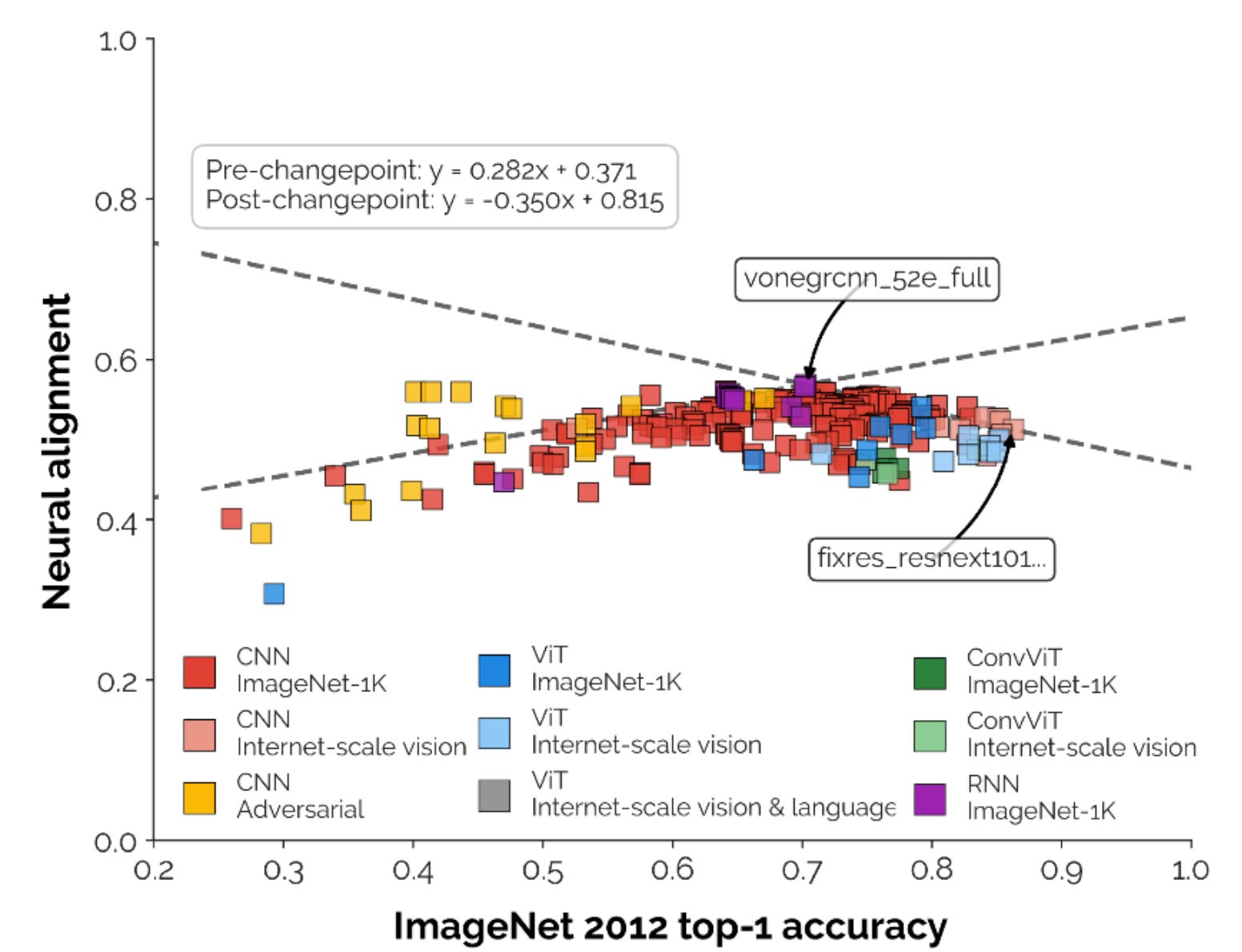
I first heard Jim DiCarlo note around 2018 that newer models seemed to be becoming less well brain-aligned. This finding has now been replicated many times. For example, Linsley, Feng & Serre (2025) find that vision ANNs whose top-1 accuracy is higher than about 70% account for less of the variance in high-level visual neurons and are less well aligned with human judgments. Gokce & Schrimpf (2025) likewise found that while behavioral alignment keeps improving with more data, neural alignment saturates.
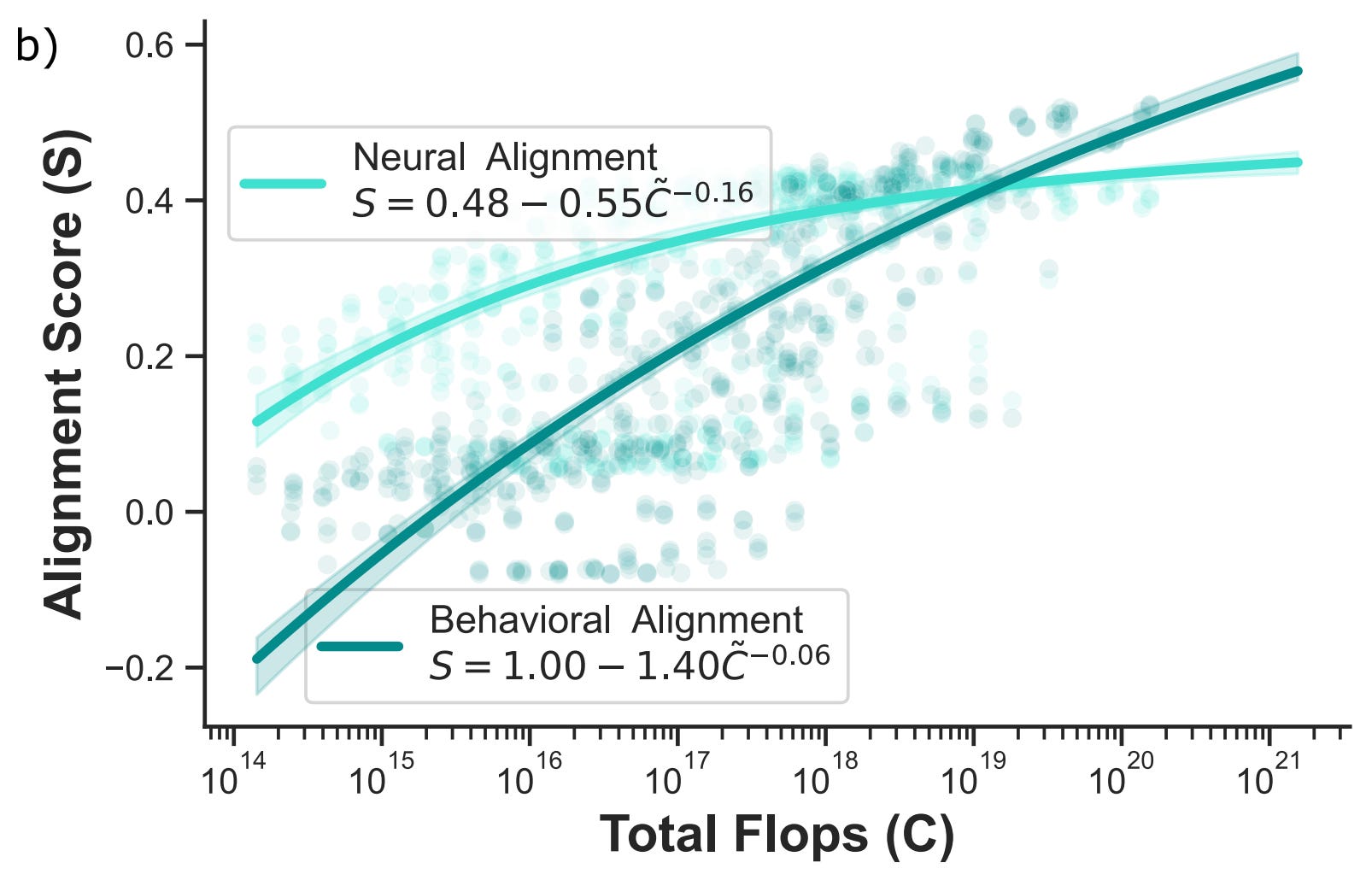
So the top-line diagnostic is quite clear: vision models and brains are not on a path to convergence. But what is it about representations in brains and ANNs that makes them different?
The geometry gap
Muzellec & Kar 2026 introduce an inverse prediction task, predicting ANN latents from brains. Their main result is that it’s harder to predict ANNs from the brain than the opposite. That means that ANNs represent more dimensions than brains; as they put it, there are units in the ANN that are “unpredictable from neural activity, reflecting biologically inaccessible dimensions.”
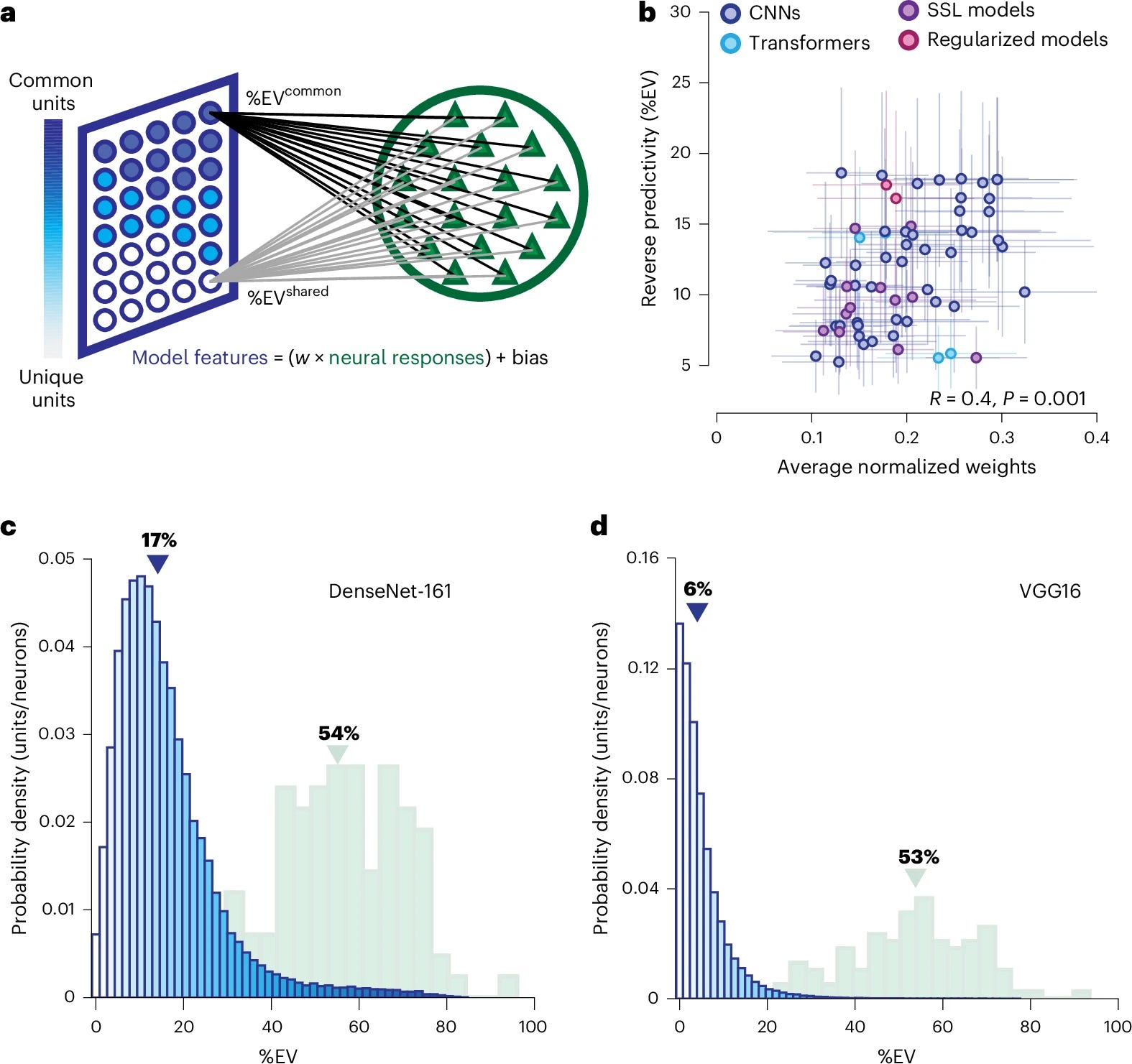
One interpretation is that ANNs are less constrained than the brain, and that ANNs can find many brittle features that do not support generalization (see also Ilyas et al. 2019). This would make them less robust than brains and would also skew the geometry of ANNs. In support of this, Muzellec & Kar find that adversarially trained networks have higher inverse predictivity2.
This idea that brains represent fewer, and perhaps more robust features than ANNs is superficially at odds with Chen and Bonner (2025), who found that ANNs and brains share a small number of universal dimensions. Those universal dimensions are also shared between ANNs with different architectures and initializations. I think what’s happening here is that the method used to find the shared dimensions (PCA + RSA) primarily focuses on high-variance directions. ANNs have many dimensions in the middle and tail of the spectrum, each carrying little variance, so variance-weighted measures barely register them. A small shared core can coexist with many model-specific dimensions.
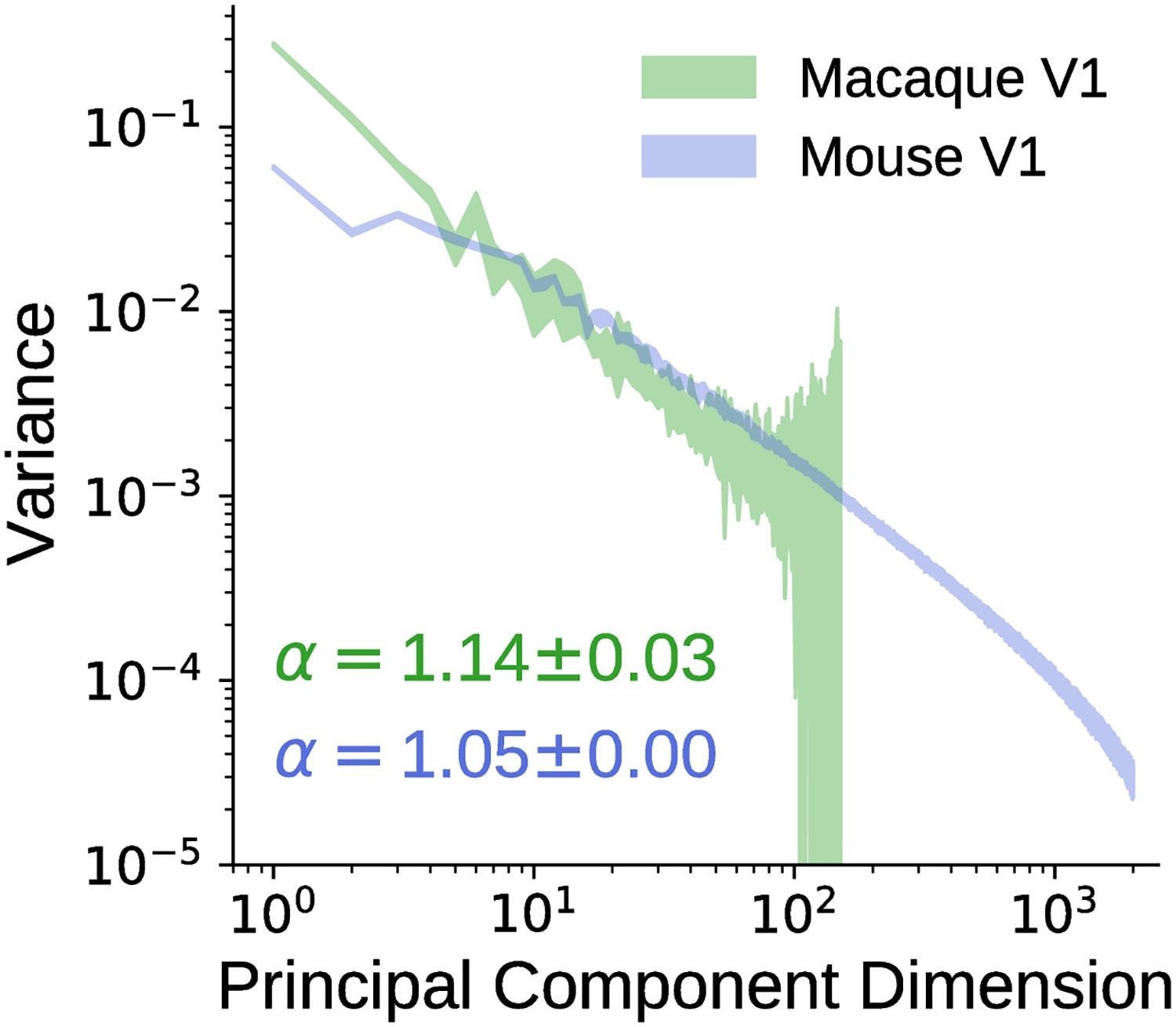
Brains and ANNs also balance capacity and robustness of the visual code differently. Stringer et al. (2019) report that mouse V1 responses to a broad set of images have an eigenvalue spectrum that falls as 1/N^alpha, where alpha approaches 1. They argue in a dense appendix involving Hilbert spaces and differential geometry that this value is critical: if alpha < 1, the neural code would be non-differentiable (bad!), and if alpha > 1, the neural code would be lower capacity (bad!). Kong et al. (2022) find a similar value of ~1 in macaque V1, and interestingly find that ResNets have exponents in the 0.4-0.8 range, making them non-differentiable. Agrawal, Mondal, Ghosh & Richards (2022) find that one can use the eigenspectrum falloff as a criterion for screening better image models.
Not only do ANNs use a different set of representations than the brain, but they follow a different path to useful representations. If we look at the output of retinal ganglion cells, different objects can have highly overlapping representations, while similar objects can have very different representations as pose and lighting change, forming an entangled code. DiCarlo and Cox (2007) first argued that the role of the visual cortex is precisely to disentangle object manifolds that correspond to different objects.
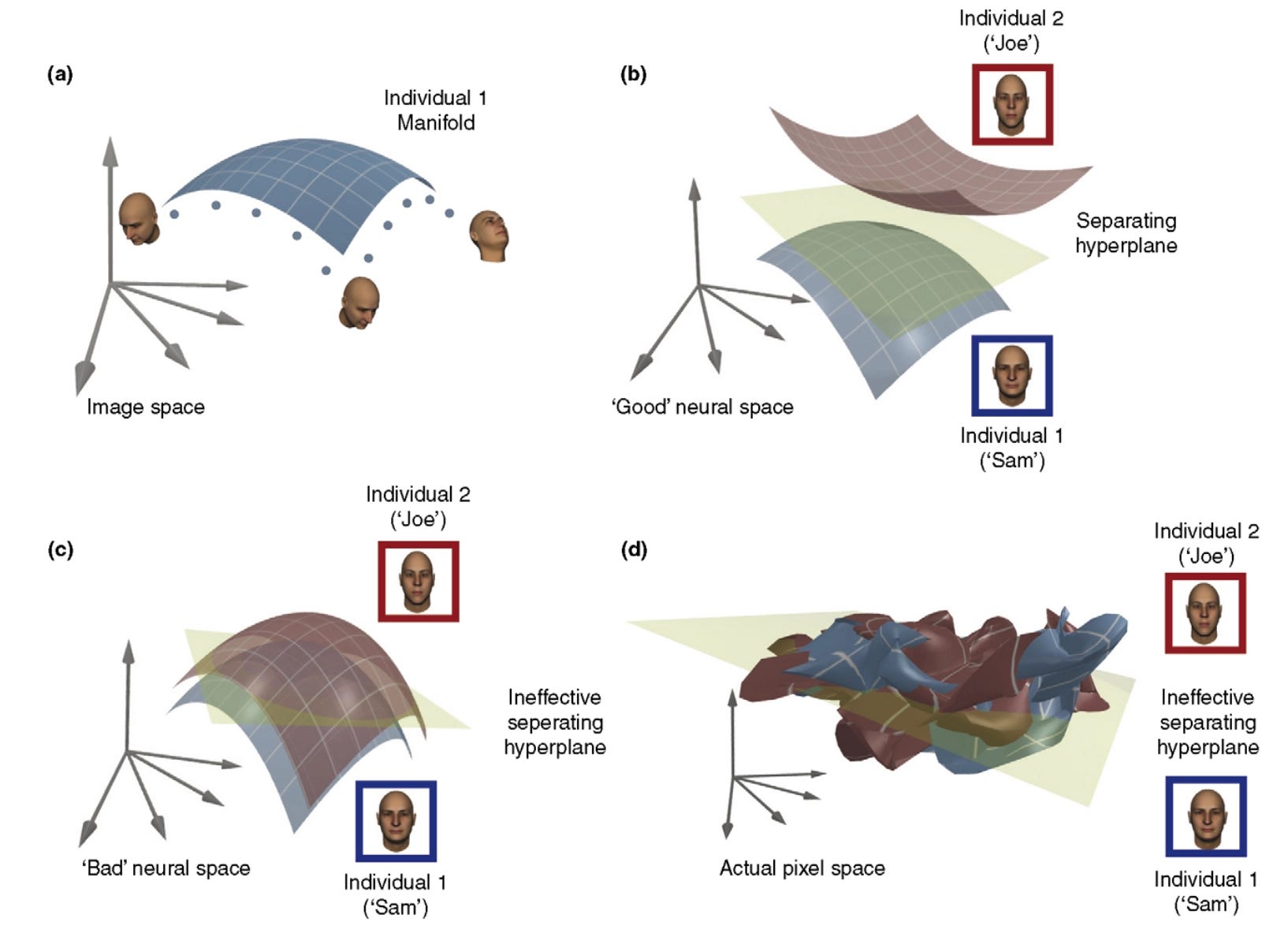
The theory of neural manifold geometry, first introduced in Chung et al. (2018), gave us the theoretical tools to understand this disentanglement process. It described object manifolds in terms of a few key properties: the separation of their centers (the signal), the equivalent radius of each manifold, and their effective dimension.
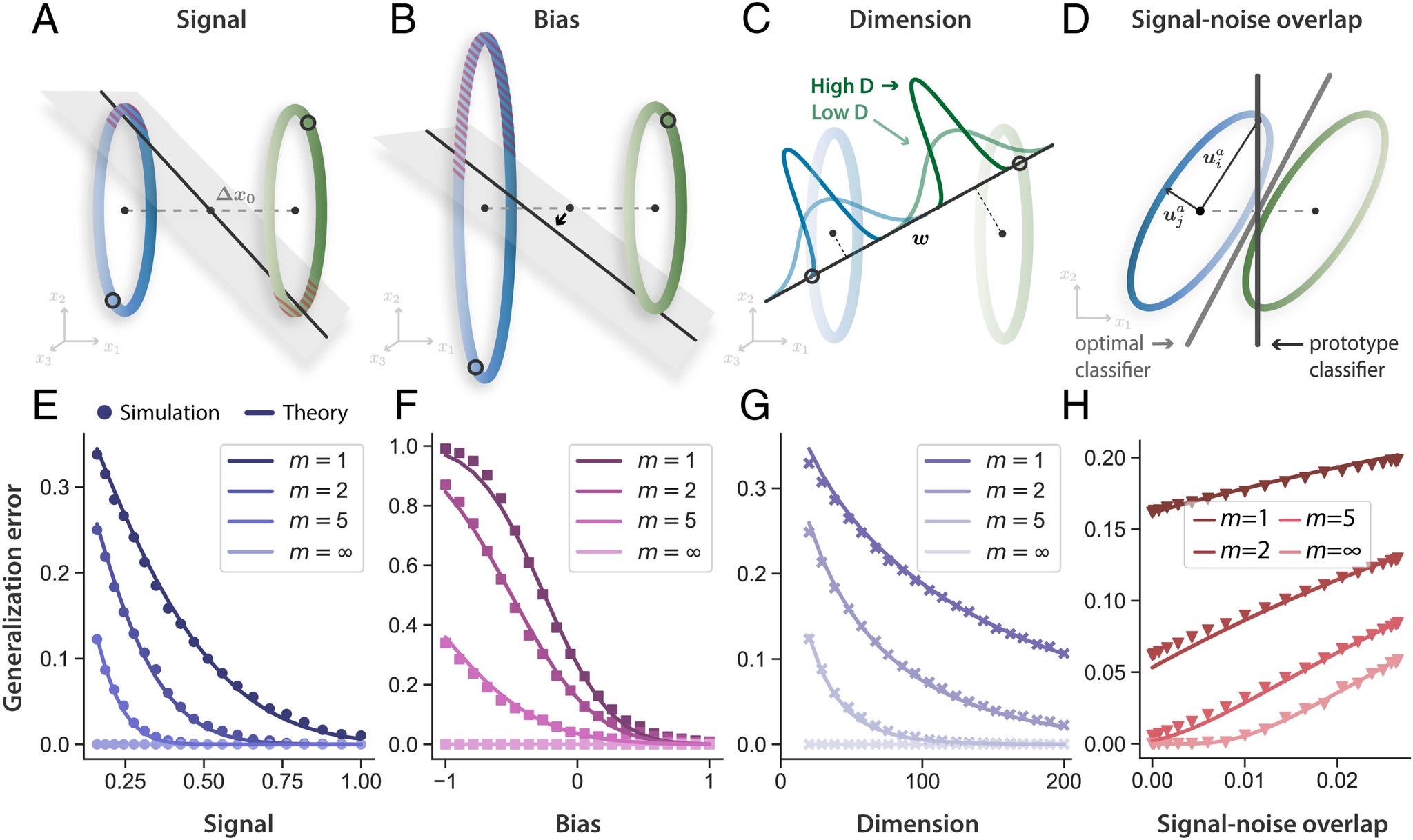
Sorscher et al. (2022) extended the theory to study few-shot learning. They found that their theoretical model could explain the performance of the neural code and ANNs on few-shot problems. However, they also found that the path taken by ANNs to find good high-level representations is markedly different than the path taken by the brain. ANNs first expand the dimensionality of object manifolds, then compress. The brain—as reflected by single neuron data—seems to follow the opposite path, first compressing the dimensionality of manifolds, then expanding.

St-Yves, Kay & Naselaris (2025) repeated the same analysis with fMRI, finding slightly different results, with the brain compressing first, but never expanding dimensionality; again, however, the path taken by ANNs and brains was both qualitatively and quantitatively different.
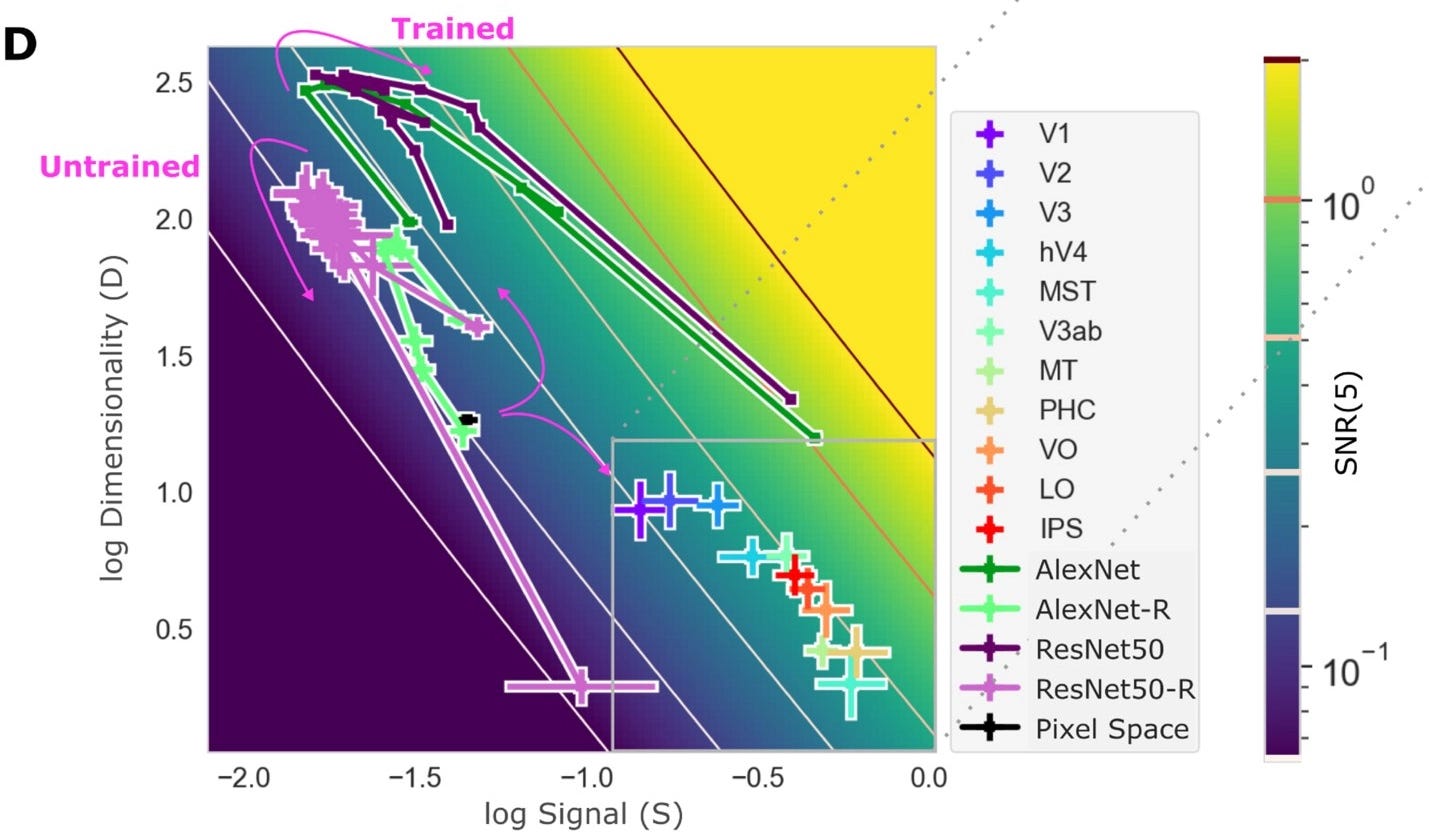
Overall, these results show that the brain and ANNs arrive at performant representations through different paths.
The linearization gap
Hénaff, Goris & Simoncelli (2019) found psychophysical evidence that the visual system transforms natural video sequences from curved to straighter temporal trajectories. Hénaff et al. (2021) followed this up with V1 population recordings and indeed found that populations of neurons straighten videos. Harrington et al. (2023) found that not all deep nets straighten videos, but that biologically inspired mechanisms or adversarial training lead to straighter trajectories.
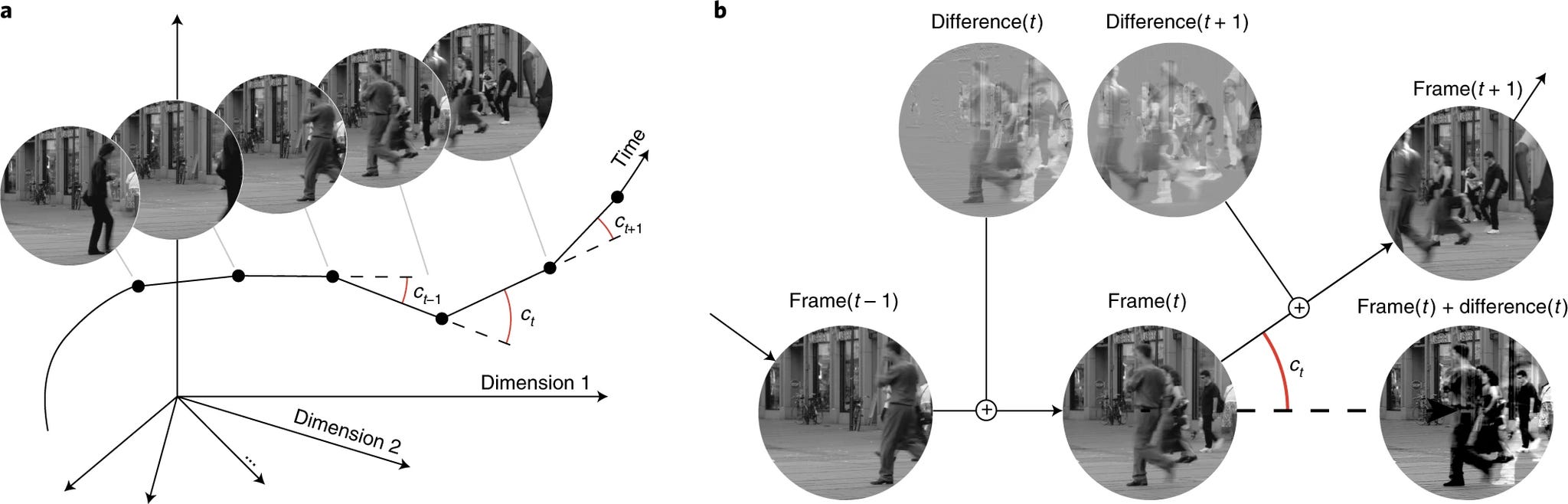
A related concept is the representation of nuisance parameters, like pose or lighting, which preserve identity. One could represent these in an entangled way throughout the visual system, which would require highly sophisticated readouts; one could factorize them, so that one dimension encodes a nuisance parameter linearly; or one could choose to be fully invariant to that factor, simply not representing it in higher-level visual cortex. Lindsey & Issa (2024) showed that networks that factorize nuisance parameters are better aligned with the brain than networks that are invariant to them.
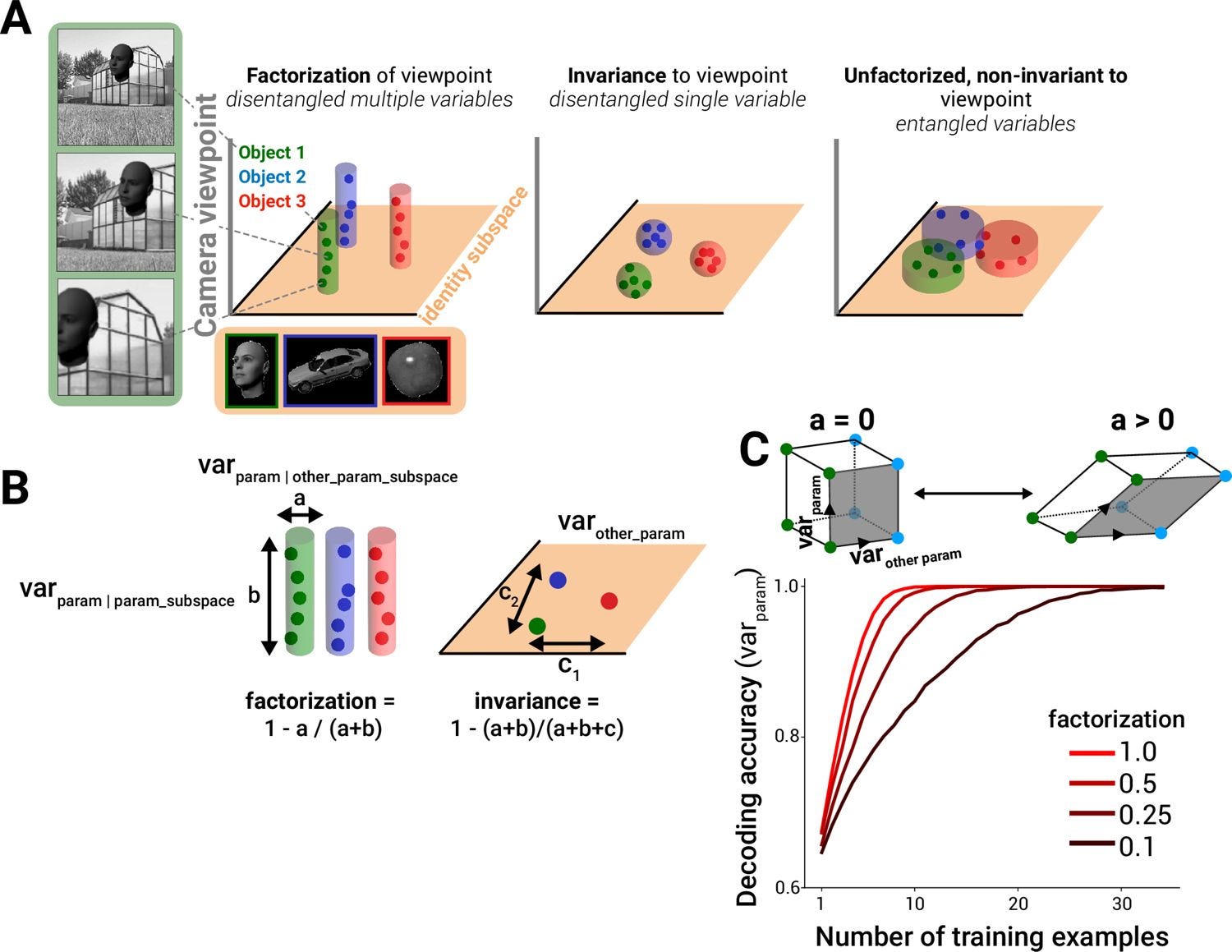
So it seems that the brain linearly encodes temporal trajectories and nuisance parameters through factorization; not every ANN does that.
The robustness gap
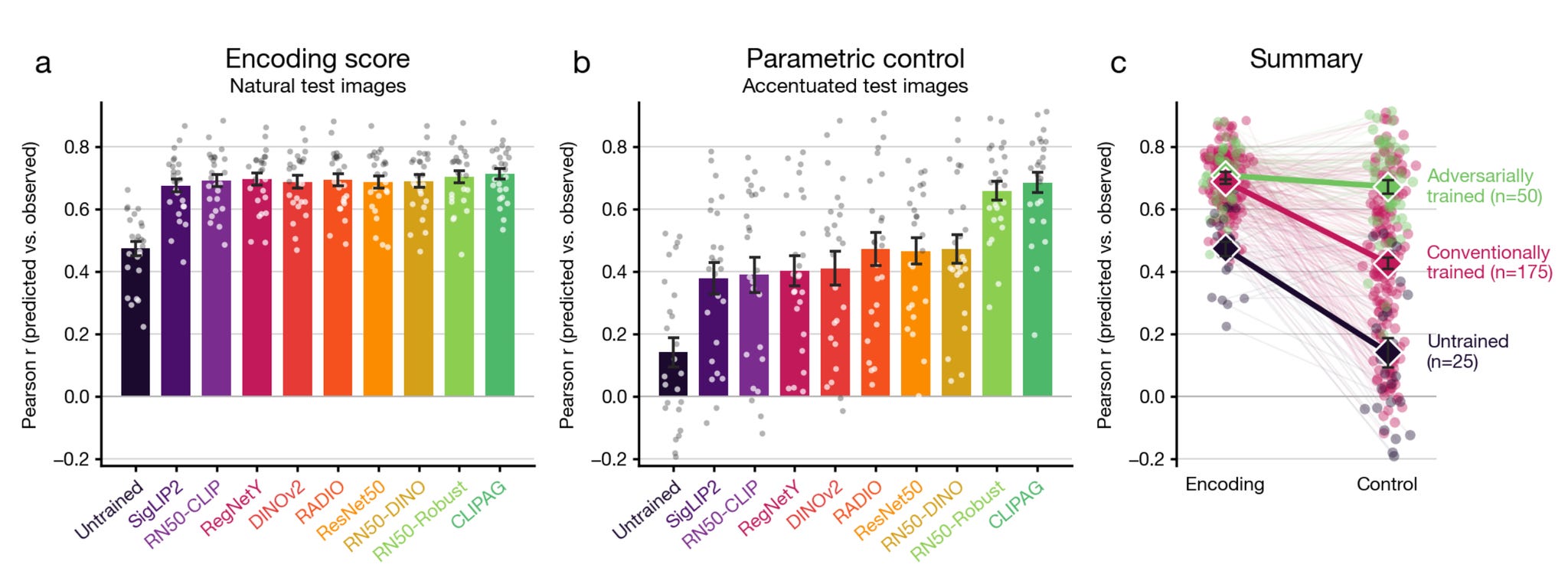
ANNs are susceptible to adversarial attacks, while humans are generally not3. Several lines of evidence show that robust ANNs tend to be more aligned to the brain, which I will only briefly touch upon here: see Mineault et al. (2024) for a more complete literature review. Berrios & Deza (2022) show that adversarial networks are better aligned to V4; Feather et al. (2023) show that robustly trained ANNs have metamers that are more like those of humans; Prince et al. (2026) show that adversarially trained networks are better for control; and Dapello et al. (2023) show that fine-tuning ANNs on neural data raises their robustness to adversarial attacks.
An early finding in the neural alignment literature is that ANNs seem to care far more about texture than shape, whereas humans care more about shape than texture (Geirhos et al. 2019). This gap has largely narrowed through very large-scale training (e.g. Dehghani et al. 2023); it still leaves the question of why there is some intrinsic shape bias in humans and not in DNNs.
ANNs were until recently less robust to different forms of distortions and noise; this gap has been mostly closed through training on very large-scale datasets (Geirhos et al. 2021). Much of that training involves large-scale augmentations, so that, in effect, the distortions become part of the training distribution. This is a little unsatisfying, although one could argue that this is in the spirit of the Platonic Representation Hypothesis. It is still worth asking why the brain, trained with a paucity of data, is robust by default.
Bonus fifth gap: interpretability
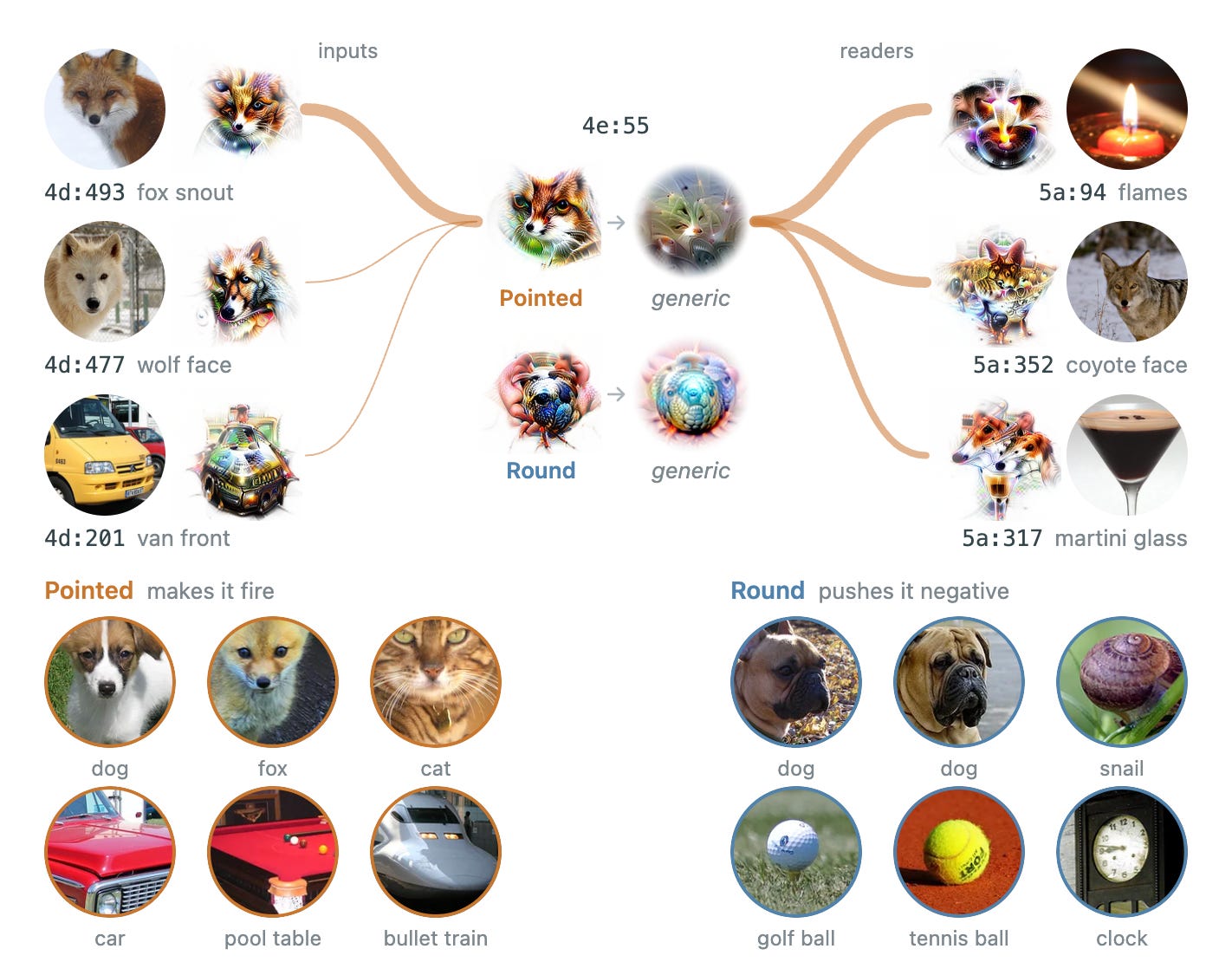
When people have tried to align biological neurons and ANN neurons one-to-one, they have generally found that this is a tougher task than aligning representations at the manifold level (see, e.g. the supplementary of Mineault et al. 2021 and Muzellec & Kar 2026, and to a lesser extent, Khosla et al. 2024). Is this another instance where ANNs and brains fail to converge?
The answer depends on whether you think neurons are fundamental or random projections of a manifold. Neuroscience has shifted its focus toward manifolds over the last 10 years, while mechanistic interpretability has shifted from analyzing individual neurons to analyzing directions in activation space. If you believe neurons are immaterial, then asking individual neuron representations to converge may be too much.
We’ve seen a swing in the opposite direction recently, with Nick Cammarata’s viral blog post arguing that individual ANN neurons are “clean” and that they can be interpreted directly. He says that interpretability techniques and training recipes have improved enough that neurons are cleaner and more monosemantic than before. In the brain, too, there were always good reasons to think that individual neuron selectivity is not arbitrary, including arguments about energy efficiency and a rich older literature about sparse coding.
Perhaps it’s time to take a fresh look at ANNs and brains at the individual neuron level. I have stared at activation atlases of vision ANNs recently released with the blog post. These newer networks don’t strike me as particularly brain-like. The first layers of the newer networks (his ConvNeXt atlas) don’t have the classic Gabor filters of V1. This could be because of the small patch scheme in ConvNeXt, but I would expect some subsequent layer to converge on Gabor-like selectivity. Likewise, I have not found V4-like curve neurons in the newer networks4. A recently released V4 atlas (Vad et al. 2026) reveals intermediate neurons that seem quite a bit more interpretable.
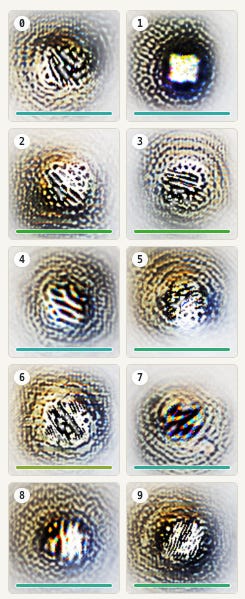
I want to be clear that this may be an instance of two disciplines focusing on different aspects of the evidence: most of Nick’s claims were about higher-level neurons, while I’ve mostly spent time looking at lower-level neurons. It’s possible that higher-level neurons in the newly trained networks are better aligned with the brain; because of the complexity of IT neurons, we’d need quantitative evidence to verify that. For now, I admit that this is more of a qualitative gap than the other quantitative ones I’ve highlighted here, which is why I’m setting it as a bonus gap. I think as we close other gaps in capturing the manifolds of neural representations, interpreting individual neurons will once again rise in importance.
Conclusion
Here I have assembled a fairly comprehensive list of the evidence that the Platonic Representation Hypothesis does not fully hold in the visual cortex. The list focuses on representational dissimilarity. Beyond that are architectural differences: retinotopy, topographical rather than convolutional architecture, temporal recursion, spikes, energy efficiency, etc. We also have very little clue about what’s going on in the dorsal visual stream, especially beyond MST.
When I defended my thesis, I could say with a straight face that the brain has useful visual representations for behavior, and that we don’t know how to build that in a computer. This is obviously no longer the case. We have plenty of examples of artificial neural networks performing competently at visual tasks. We’ve also seen partial convergence between the brain and task-driven neural networks. Nevertheless, there remain clear quantifiable divergences. To answer Shahab’s call in the intro, I think we live in the most interesting of worlds: ANNs are useful to distill neural data, as predictive models, and for control, but the brain uses divergent representations, which tell us something interesting and unique about the brain’s inductive biases.
How can we make progress? While task-driven neural networks have served us well, we could leapfrog them with data-driven neural networks trained directly on neural data (aka digital twins, e.g. Wang et al. 2025). Many of the gaps highlighted above should be mechanically resolved by distilling neural data into models, with the possible exception of adversarial robustness which I’ve found to be non-trivial to transfer between models (Mineault et al. 2024).
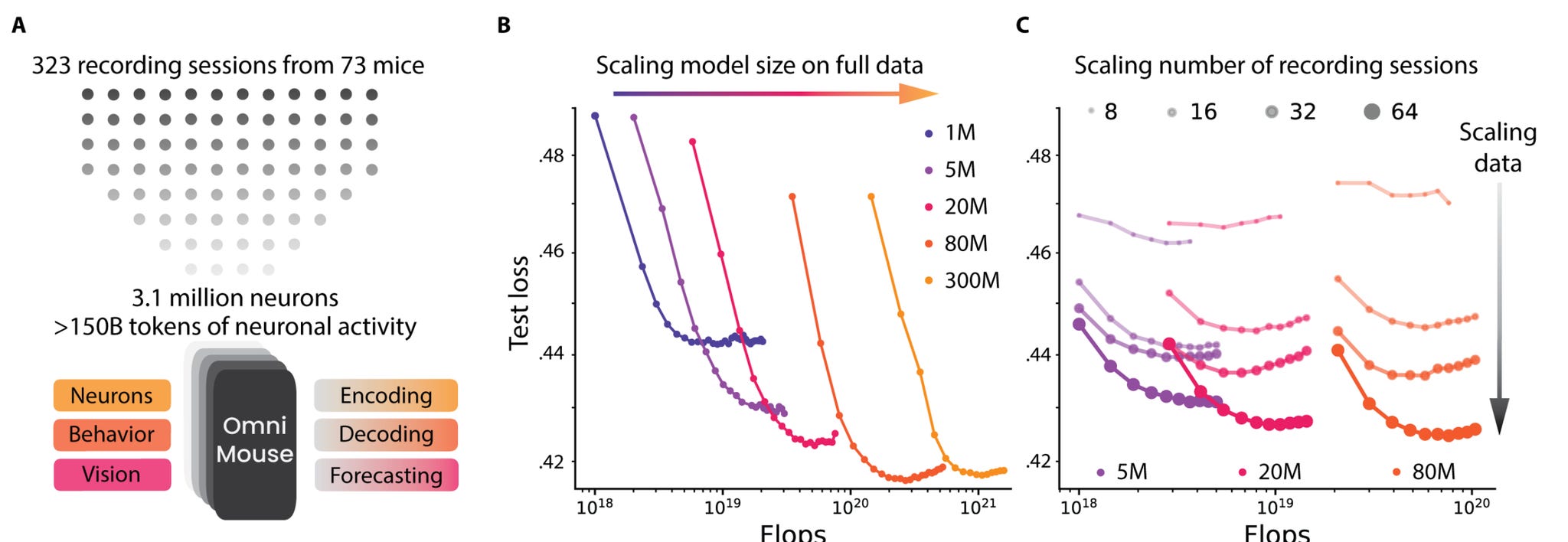
The blocker here is that we’re still mostly using datasets from the past decade to compare brains and artificial neural networks. We will need far more data to build digital twins (Willeke et al. 2026). I know many of us are excited for the release of new large-scale datasets. Let’s collect some data.
I will avoid repeating any of the criticisms from Bowers 2022, which starts from the deeply skeptical perspective that ANNs explain almost no psychological findings that pertain to vision. That perspective mostly focuses on how networks react to inputs far outside the training distribution, which I don't think is a particularly useful lens.
Elmoznino & Bonner (2024) find that models which best account for the brain tend to be high-dimensional. It may be that by using linear regression to build a bridge, we’re tipping the scale towards large representations rather than minimal representations. This highlights the importance of correctly evaluating models, something I’ve mentioned previously. The method proposed by Muzellec & Kar could help us tease apart these different scenarios.
Although see Elsayed et al. (2018) and subsequent work.
There are definitely neurons downstream that leverage curve-like selectivity, like the wheels-and-threads neuron s1 b2 0. I just haven’t found neurons upstream that prefer one curve like the classic neuron selective neurons of InceptionV1, .